

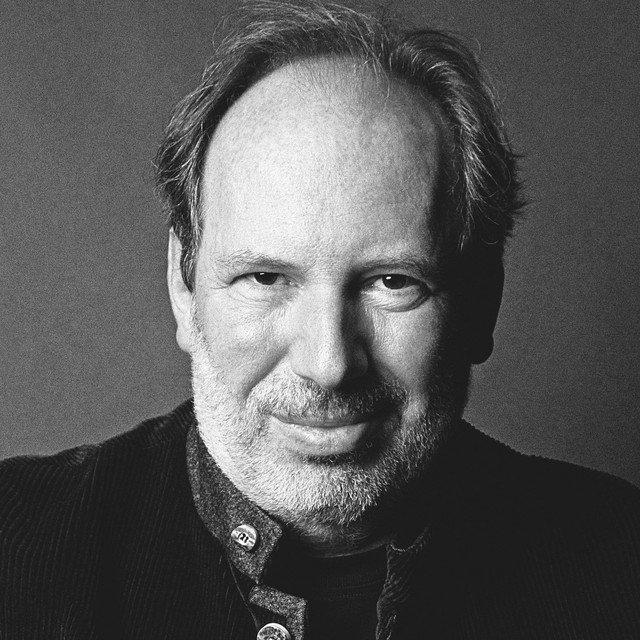
Hans Zimmer built a band, not an orchestra
The Diamond in the Desert concert cut runs 1:46:01 and hands its biggest cues to soloists rather than sections. A timestamped guide to who plays what — Tina Guo, Lisa Gerrard, Lebo M, Loire Cotler, Pedro Eustache — and where Zimmer's method breaks from John Williams.
Photo via Spotify
The chapter list is the argument. One hour, forty-six minutes, eleven markers: Pirates of the Caribbean at 00:00, The Dark Knight at 13:41, Interstellar at 21:56, Dune at 33:20, Inception at 43:18, Man of Steel at 52:45, Wonder Woman at 1:01:00, Gladiator at 1:10:47, Lion King at 1:25:48, Dark Phoenix at 1:38:00, Dunkirk at 1:43:29. That is a set built the way a headliner builds one — an opener that everybody already knows, a slow middle, a closer chosen for mood rather than volume. It is not how a symphony program is built, and that difference is the whole story of what Hans Zimmer did to film music.
The footage comes from Hans Zimmer & Friends: Diamond in the Desert, the concert film shot in Dubai, directed by Paul Dugdale with Jerry Bruckheimer executive producing, released to cinemas in 2025. On stage: Zimmer and an eighteen-piece band. Not an orchestra with a composer waving at it — a band, with named players who get their own spotlights.
One caveat on those timestamps: they come from a fan edit, not the release print. matogolf’s 1:46:01 cut is billed by its uploader as a best-of and plays like one. Everything between the score suites is edited out — the released film also carries interview segments with Nolan, Villeneuve and Chalamet — leaving eleven blocks of music stitched end to end so each score runs unbroken. Useful for studying the suites; useless as a record of how the night was staged.
The résumé, compressed
Zimmer was born in Frankfurt in 1957 and never saw a conservatory. He came up through pop and advertising, played synthesizer with The Buggles, and apprenticed to Stanley Myers on British films. His break was luck plus a good record: Barry Levinson’s wife heard Zimmer’s score for the anti-apartheid drama A World Apart, Levinson hired him for Rain Man in 1988, and the film won Best Picture.
The Academy Award came six years later for The Lion King. The second came for Dune in 2021 — twenty-seven years between statues, which tells you how long an institution takes to catch up with a method it doesn’t recognize. In between: Crimson Tide, Gladiator, the Pirates of the Caribbean films, The Dark Knight, Inception, Interstellar, Dunkirk, Man of Steel, Wonder Woman, Blade Runner 2049, Dune: Part Two.
The other half of the résumé is a business. In 1989 he founded Media Ventures, later Remote Control Productions, a scoring workshop that launched Harry and Rupert Gregson-Williams, Klaus Badelt, Henry Jackman and John Powell. No composer since the studio-era music departments has had that footprint, and none has been more argued about for it.
The band, chapter by chapter
Here is what makes the show worth 106 minutes rather than a greatest-hits stream. Each suite is arranged around a specific person, and most of them are on the original recordings.
33:20 — Dune. Here the instrument-building habit becomes visible. Loire Cotler is billed as the voice of Dune; she wrote the lyrics and vocal arrangements for both Villeneuve films, and her background is South Indian konnakol rhythm syllables, frame drums and overtone singing rather than choral technique. Beside her, Pedro Eustache — Venezuelan-born woodwind player and instrument maker — plays horns he built for the score, including a 21-foot one of PVC pipe and a contrabass duduk. For Part Two he invented a chromatic duduk, because Zimmer asked for a theme the standard instrument couldn’t play.
1:01:00 — Wonder Woman. Tina Guo co-wrote this theme with Zimmer and played the cello solo. By her account she brought her electric cello into the Batman v Superman sessions, they traded ideas, and the theme existed inside an hour. It has since carried three films. She was the featured soloist on the Hans Zimmer Live tours from 2016 through 2025.
1:10:47 — Gladiator. Lisa Gerrard is the reason this score sounds like nothing else from 2000. The former Dead Can Dance vocalist co-composed with Zimmer and sings in her own invented vocabulary — glossolalia, not a language — which is exactly why it reads as ancient instead of Roman. The score won the Golden Globe for Best Original Score.
1:25:48 — Lion King. Lebo M sings the opening call of “Circle of Life,” and Zimmer brought him onto the 1994 film to build the choral and chant writing. Thirty-two years on, that entrance is still the most recognizable four seconds in the Disney catalog. Elton John and Tim Rice wrote the songs; you can find Elton John’s page here for the rest of that catalog.
1:38:00 — Dark Phoenix. Guthrie Govan played electric guitar on the score. Best known from the instrumental trio The Aristocrats, he was found by Zimmer on YouTube playing fretless guitar — a very 2010s way to staff a film score.
21:56 — Interstellar. No soloist is featured the way the others are, and that is the point: the lead instrument is a pipe organ. Zimmer and Nolan spent five days at Temple Church in London recording its 1926 Harrison & Harrison, played by the church’s director of music, Roger Sayer. Zimmer layered 34 strings, 24 woodwinds and four pianos around it afterward.
Two more carry the show without a signature cue: Rusanda Panfili, a solo violinist on the live shows since 2016, and guitarist Nile Marr — Johnny Marr’s son — with the ensemble since the same year. Nick Glennie-Smith, a Zimmer collaborator of decades, runs the stage as musical director.
What Zimmer actually does
Strip the spectacle and a consistent method shows up. Zimmer starts with a sound rather than a tune, then builds out of what that sound can do — which is why, for Dune, the first move was sending Eustache to build instruments that did not exist.
Timbre carries the drama. In a Zimmer cue, what changes over eight minutes is usually not the melody. It is the density, the register, and what is making the noise — closer to how a techno producer thinks about a track than how a symphonist thinks about a movement. His pop background is the reason.
How he builds tension
Dread is the thing he is best at, and he builds it from a small set of repeatable devices. Not one of them is a frightening tune.
Withhold the resolution. For The Dark Knight he wanted a Joker cue that never landed, so he built it on a single note, stretched and distorted, with razor blades dragged across cello strings for texture. The tension is structural, not melodic: the ear waits for a chord and Zimmer refuses to supply one. Hold that long enough and the audience generates the anxiety itself.
Make the clock audible. Dunkirk is the clearest case. Nolan asked for no emotional music until the very end — suspense only — so Zimmer sampled Nolan’s own pocket watch and ran the ticking as the score’s metric pulse. A tick is not a musical idea. It is a deadline. Once it is in the mix, every cue reads as time running out.
Rise without ever arriving. Over that watch sits a Shepard tone: stacked octaves engineered so the scale seems to climb forever without getting higher. Nolan wrote the screenplay knowing it was coming. A conventional crescendo has to peak, and peaking releases pressure; an illusion of endless ascent never gives that relief back — precisely what a film running three interlocking timelines needs.
Bend the tempo instead of the harmony. Inception is built from subdivisions and multiples of one tempo, taken from the Edith Piaf record the characters use to wake themselves. The foghorn brass that launched a thousand imitations is that song’s opening bar slowed past recognition. Because every cue is tempo-related to every other, the score can drop into half-time as the team goes a level deeper, and the audience registers dream logic as a physical change in speed — tension by time-scale rather than dissonance.
Let the pulse do the arithmetic. Interstellar runs the idea forward. A ticking pulse sits under the Miller’s-planet sequence, where an hour on the surface costs seven years off it, and it tightens as they descend. A popular reading holds each tick equals a day back home; that is a listener’s inference, not anything Zimmer confirmed, and the scene works whether or not the math is exact. The clock is the antagonist.
The unifying move is accumulation and denial rather than development. The pattern rarely changes. What changes is how much is stacked on it, how low it sits, and how long he withholds what the ear was promised.
Where this splits from John Williams
John Williams, born 1932, works the opposite way and works it beautifully. He has five Oscars — Fiddler on the Roof, Jaws, Star Wars, E.T., Schindler’s List — and conducted the Boston Pops from 1980 to 1993. His method descends from late-Romantic opera by way of the Golden Age studio composers: give every character, place and idea a melody, then develop, invert, fragment and recombine them across three hours of film. Star Wars is a leitmotif catalog you could teach from. The score exists complete on paper, and the orchestra is the instrument that renders it.
Zimmer inverts the hierarchy. The recording is the composition. The score exists as a session — layers, processing, players brought in for what only they can do — and the paper version is downstream of the sound. A Williams cue can be performed by any competent orchestra and remain itself. A Zimmer cue often cannot, because the specific human on the specific instrument is the theme. You cannot sub out Gerrard on Gladiator, or Cotler on Dune, the way you can sub out a second horn.
That is also the honest criticism. Melody-first writing is hard to imitate; texture-first writing is not. The ostinato-plus-low-brass template Remote Control industrialized got copied into a decade of trailers and games until it wore out, and Zimmer’s best work is often furthest from it. But the trade bought something. Williams made the orchestra sound enormous. Zimmer made it sound like it was in the room with you, then like a room you had never been in.
Where modern classical goes from here
The concert hall has stopped resisting. Hildur Guðnadóttir took the 2020 Best Original Score Oscar for Joker and kept working at the strange end of the register, with Hedda in 2025 and 28 Years Later: The Bone Temple in 2026. Ludwig Göransson has become the default choice for scale, scoring The Mandalorian and Grogu for 2026. Both write the way Zimmer taught the field to write — sound first, theme second — and both are treated as composers rather than technicians.
The traffic runs the other way too. Max Richter’s Cosmology, an organ concerto co-commissioned by the Sydney Symphony, premiered at the Royal Albert Hall in 2025, written for Anna Lapwood, whose 2025 solo album topped the Official Classical Albums Chart. Lapwood programs Richter, Zimmer and Saint-Saëns on one night without apologizing for it. The repertoire is being rebuilt around instrumental music that arrived through cinema, and the audience showing up is younger than the one classical institutions spent thirty years failing to recruit.
Zimmer’s own part in that shift was almost accidental. He spent decades behind a console until Johnny Marr told him to stop hiding behind a screen and go play. The result fills arenas with instrumental music and gives the solo bow to a cellist, a woodwind builder and a South African vocalist. The Instrumental Pop, Violin and Soft Guitar rotation here is the domestic-scale version of the same idea, and the Harry Styles Meltdown note is the pop-star version. All three say the same thing: audiences will sit still for music with no words in it, provided somebody on stage is visibly doing something difficult.
Whether that is a permanent widening of the classical audience or a cinema-driven blip, nobody knows yet. But a set that opens on Pirates and closes on Dunkirk, in an arena, with eleven soloists getting their names called, is a stronger argument for the form than any conservatory has made this century.