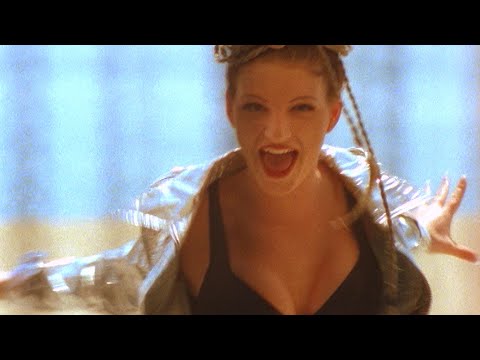

90s Dance Mix #212
Thirty-four tracks of Eurodance fever-dream — re-recordings and revival cuts assembled around the Génération 90 catalog, which keeps the canon alive on YouTube even when the original masters have drifted into licensing limbo. This is the music of European clubs and roller rinks circa 1993–1997, with a healthy assist from Corona, Vengaboys, and whatever studio collective is currently re-cutting “Rhythm Is a Dancer” this month. The whole rotation is a long argument with the kind of person who thinks Eurodance is a guilty pleasure. It isn’t. There’s nothing guilty about it.
Programmed for one specific situation: the friend’s birthday-party-at-home where somebody’s parents are watching the kids in the other room and the actual adults are pretending it’s still 1996 in the kitchen. “Barbie Girl” leads, because it’s the song that resets every brain to its high-school setting. The Génération 90 cover is the right version — the Aqua original has gotten the slight nostalgia-irony patina that the cover happily skips. Within four bars of the cover, the kitchen-counter crowd is committed. There’s no negotiating from there.
“Rhythm Is a Dancer,” “Saturday Night,” “Be My Lover” — that’s the front-half punch-list, and it’s deliberate. The Snap! and Whigfield catalogs are the structural spine of this entire genre, and the playlist treats them as such. The Whigfield placement specifically was the host’s request, because she had been to a roller rink in Paris in 1996 where that song played four times in a single evening, and she has spent thirty years waiting for an excuse to recreate that experience. The playlist obliged.
By the time “I Like to Move It” and “What Is Love” hit you’re committed. The Reel 2 Real cut is sequenced after the Haddaway because, in the friend-group’s collective memory, that’s the order they played at every late-’90s school dance, and the order is doing the work of triggering specific year-and-grade memories. One of the friends mentioned, halfway through that block, that she could remember the exact pattern on her seventh-grade dance dress, which is the kind of involuntary detail that signals the playlist is working.
The Vengaboys “We Like to Party” is the polite warning that the rest of the playlist is louder and dumber and not sorry. The Vengaboys catalog is a target for revisionist criticism in a way the rest of the Eurodance canon isn’t, and the playlist makes a deliberate point of running their material in the second half — sequenced where it can do its actual work, not parked in a corner. “Boom, Boom, Boom, Boom!!” is the song that I have personally watched grown men in their forties form a moshpit to. Twice. At two different parties. The track is on the playlist for that reason.
The HokkaidoDJ extended dance-generation mix in the middle is the long-tail breakdown built for the moment everyone decides to refill their drinks at the same time. It runs about fifteen minutes — longer than any of the surrounding tracks — and that’s the right call. The mix is structured to ride through a natural party-energy dip without anyone noticing the rotation has slowed down. By the time it ends, the kitchen-counter crowd is back and the playlist can return to the punchier singles.
Corona “Baby Baby” sits in the back third as the deep-cut left-turn that elevates the rotation past first-pass Eurodance orthodoxy. The Corona catalog beyond “Rhythm of the Night” is, in my estimation, criminally under-served on streaming, and including a non-radio cut is a small piece of advocacy on behalf of an artist whose catalog deserves the broader listen.
Why re-recordings instead of originals? Because the originals are scattered across labels that don’t talk to each other and have been since 1998, and the Génération 90 versions sound right on a phone speaker and a kitchen stereo and a bluetooth puck on a back patio — which is where this music lives now. The streaming-licensing economics of the cover catalogs effectively recreate the working-DJ economy of the era, where rights to the original singles were too expensive for small operators and the cover-band industry filled the gap. The playlist honors that lineage.
It’s not a museum piece. It’s a working tape. If you grew up with this music, you don’t need me to explain why it still works. If you didn’t, the playlist makes a case in about twelve minutes. Played front to back at two birthday parties so far. Both times the kids in the other room ended up dancing in the kitchen by the end. Verdict: holds up.