
Partytime #914
Seventy-six tracks of mid-2014 party-radio — the September snapshot when the year’s peak hits had stabilized and the year-end charts were starting to lock in. Same year as the “Partytime 2014” tape but a slightly different sequencing pass, captured in real-time September rather than retrospective year-end. The fingerprints are similar; the order is different. The naming convention (“914”) is the timestamp shorthand — September 2014, the month the in-real-time snapshot was locked in before the year-end-recap rotation could begin in earnest.
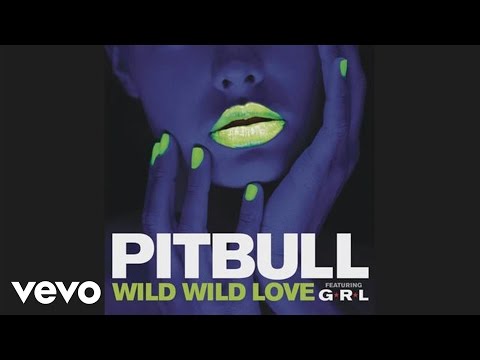
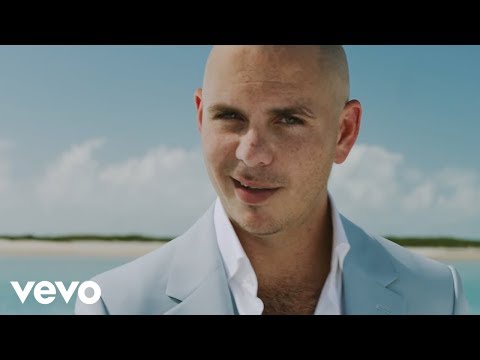
Pitbull anchors the pop-EDM crossover. The Pitbull catalog is the rotation’s working-utility for the year’s bilingual-pop-EDM register — the catalog had reached the saturation level where every Top 40 station was playing two-to-three of his singles per hour, and the playlist honors the catalog’s distributed-across-the-year presence rather than treating the artist as a single-cut pull. The placement is across the rotation rather than clustered, because the Pitbull saturation pattern across the year was distributed across multiple singles rather than concentrated in a single release.
Maroon 5 carries the pop-rock-radio spine. The Maroon 5 catalog is the rotation’s structural backbone for the year’s pop-rock-radio commitments, and the placement honors the catalog’s role across the rotation. Charli XCX is on here the same way she’s on the 2014 catalog — “Boom Clap” opens, because by September it was the structural anchor of the rotation. The placement at first-track is the rotation’s structural commitment to the September-specific snapshot — the song’s universal-recognition chorus had, by September 2014, reached the saturation level where the cut was the dominant pop-radio rotation track for the month, and the playlist honors the song’s role at the September-rotation peak.
Iggy Azalea with Rita Ora “Black Widow” follows because the playlist mirrors the radio. The placement at second-track is the rotation’s structural commitment to honoring the actual radio-rotation sequencing rather than rearranging the cuts for variety — the back-to-back placement of the two cuts mirrors how they actually played on the September 2014 working-radio rotation, and the playlist’s choice to honor the historical sequencing is the methodological commitment of the “Partytime” series.
Röyksopp with Robyn “Do It Again” sits in the same sequencing position it had on the 2014 tape — that pairing was the structural lift of the year. The placement consistency between the September snapshot and the year-end snapshot is the methodological commitment of the “Partytime” series — the songs that the rotation has identified as the year’s structural-anchor moments stay in their structural-anchor positions across the in-real-time and year-end captures, and the playlist’s choice to maintain the placement consistency is the structural commitment to the methodological anchor.
Enrique Iglesias with Descemer Bueno and Gente De Zona “Bailando” is the same global-anchor placement. Nico & Vinz “Am I Wrong” is the world-pop-radio bridge that was inescapable that summer. The placement at the fourth-and-fifth-track positions is the rotation’s structural commitment to the year’s global-pop-radio register — the two cuts were, in the summer-into-fall 2014 working-rotation, the structural anchors of the year’s cross-continent saturation pattern, and the playlist’s choice to honor the back-to-back placement is the methodological commitment to the historical sequencing.
Meghan Trainor “All About That Bass” and Ariana Grande with Iggy Azalea “Problem” are the front-half pop-radio peaks. The two-track block is the rotation’s structural commitment to honoring the year’s actual radio-rotation experience — the songs were, in the summer-into-fall 2014 working-rotation, the dominant pop-radio cuts for the period, and the placement is doing the work of providing the rotation’s universal-recognition front-half block.
Charles Bradley with Menahan Street Band “The World” is the soul-revival pull. The placement is the rotation’s structural moment of acknowledging the year’s deeper-rotation listener — the Bradley catalog was, in 2014, the structural anchor of the year’s soul-revival working-rotation, and the placement is doing the work of providing the rotation’s cross-genre bridge that the year’s actual radio-rotation absolutely included.
John Newman “Love Me Again” and Coldplay “A Sky Full of Stars” close the front-third. The two-track block is the rotation’s structural pivot from the front-half pop-radio commitments to the back-half deep-cut block — the songs are doing the work of providing the rotation’s universal-recognition closing-front-third moment, and the placement is the methodological commitment to the year’s actual radio-rotation sequencing.
The difference between this tape and the year-end version is the late-rotation: the September version weights toward the songs that were peaking in real-time, while the year-end version makes room for the November and December singles. Both are valid. Both are useful for different listening contexts. The September-rotation snapshot is the rotation’s structural commitment to the in-real-time capture methodology — the playlist is meant to capture the September 2014 working-rotation rather than the year’s full catalog, and the rotation’s choice to honor the September-specific sequencing is the methodological commitment to the in-real-time framing.
This one is the in-month snapshot, useful for anyone who wants to feel exactly what September 2014 sounded like in the kitchen on a Saturday afternoon, the actual order it was on, before anyone knew what the year would canonize. Made for the rotation. Held up because the rotation was good. The cross-snapshot comparison artifact framing is the methodological value — the playlist is useful as a comparison point against the year-end version and against the surrounding monthly snapshots, providing the listener with a multi-perspective view of the same year’s working-rotation.
Worn & talked about by artists on this playlist
Affiliate · We may earn- Ariana Grande on vinyl Find on Amazon →
- Coldplay on vinyl Find on Amazon →
- Chris Brown on vinyl Find on Amazon →
- Calvin Harris on vinyl Find on Amazon →
- Miley Cyrus on vinyl Find on Amazon →
- Pitbull on vinyl Find on Amazon →